
In mining and industrial operations, conveyor belts are often exposed to extreme temperatures from materials like sintered ore, hot cement, slag, or chemicals. Standard conveyor belts can degrade, crack, or delaminate under such conditions, leading to downtime and safety risks. High-temperature resistant mining conveyor belts are engineered to withstand these challenges, ensuring durability, safety, and efficiency in the most demanding applications.
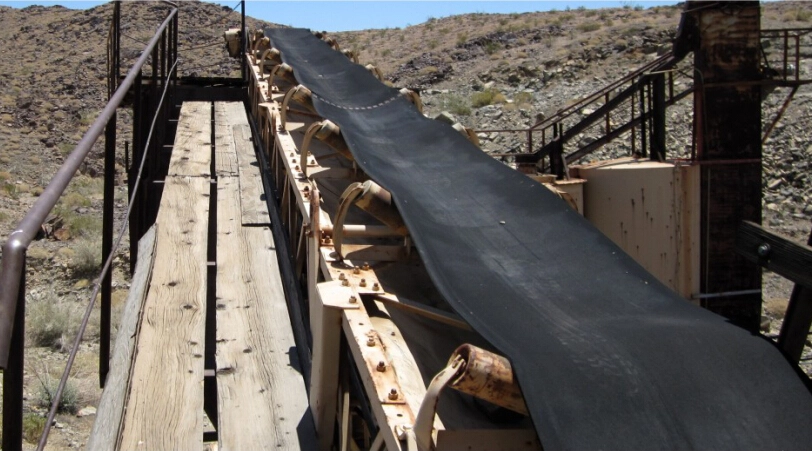
Key Features of High-Temperature Resistant Conveyor Belts
- Specialized Heat-Resistant Materials
- Carcass Materials: Made from heat-resistant fabric layers (e.g., EPDM, Nylon, or polyester with heat-resistant coatings) that maintain strength and flexibility under thermal stress.
- Cover Compounds: Features synthetic rubber covers (e.g., EPDM or SBR-based compounds) that resist cracking, hardening, and abrasion at elevated temperatures.
- Temperature Tolerance
- Continuous Exposure: Withstands temperatures ranging from 100°C to over 200°C (212°F to 392°F), depending on the belt grade and design.
- Short-Term Peak Resistance: Some belts can handle peak temperatures up to 400°C (752°F) for limited durations.
- Applications in High-Heat Environments
- Cement Plants: Transporting hot clinker, cement, and raw materials.
- Steel and Metallurgy: Moving sintered ore, slag, and molten byproducts.
- Mining Operations: Handling hot extracted materials in processing plants.
- Power Generation: Transporting ash and boiler residues.
Advantages of High-Temperature Resistant Belts
- Extended Service Life: Resists degradation from heat, oxidation, and moisture, reducing replacement frequency.
- Reduced Downtime: Minimizes belt failures and unplanned maintenance in critical operations.
- Safety Enhancement: Prevents belt hardening/cracking that could lead of sudden breaks or material spillage.
- Cost Efficiency: Lowers long-term operational costs despite higher initial investment.
Types of High-Temperature Resistant Belts
- T1/T2/T3 Grade Belts
- T1: Resists temperatures up to 100°C (212°F).
- T2: Suitable for 125°C (257°F).
- T3: Designed for 150°C (302°F).
- Higher-Temperature Specialty Belts
- Heat-Resistant Steel Cord Belts: Reinforced with steel cables for heavy loads and extreme heat.
- Ceramic-Coated Belts: For applications involving abrasion and temperatures exceeding 200°C (392°F).
Selection Guidelines
- Operating Temperature: Choose a belt rated for at least 10-20°C above the maximum material temperature.
- Material Abrasiveness: Pair heat resistance with abrasion-resistant covers for harsh materials like slag or clinker.
- Belt Design: Consider ply count, cover thickness, and reinforcement type (fabric vs. steel cord).
Maintenance Tips
- Regular Inspections: Check for cover cracking, edge damage, or stiffness.
- Proper Tensioning: Avoid over-tensioning, which accelerates wear in high-heat conditions.
- Cleanliness: Remove adhered hot materials to prevent localized overheating.
Why Choose Our High-Temperature Resistant Belts?
Our belts are manufactured with:
- Advanced Polymer Compounds: Ensuring flexibility and heat dispersion.
- Robust Carcass Design: Preventing delamination and ply separation.
- Compliance with International Standards: Including ISO 4195 and DIN 22102.
Conclusion
High-temperature resistant mining conveyor belts are essential for industries operating under extreme thermal conditions. By investing in belts engineered for heat resistance, companies can enhance safety, reduce downtime, and optimize productivity.
Contact us today to explore our range of heat-resistant conveyor belts tailored for mining, cement, and metallurgy applications!

 English
  French